

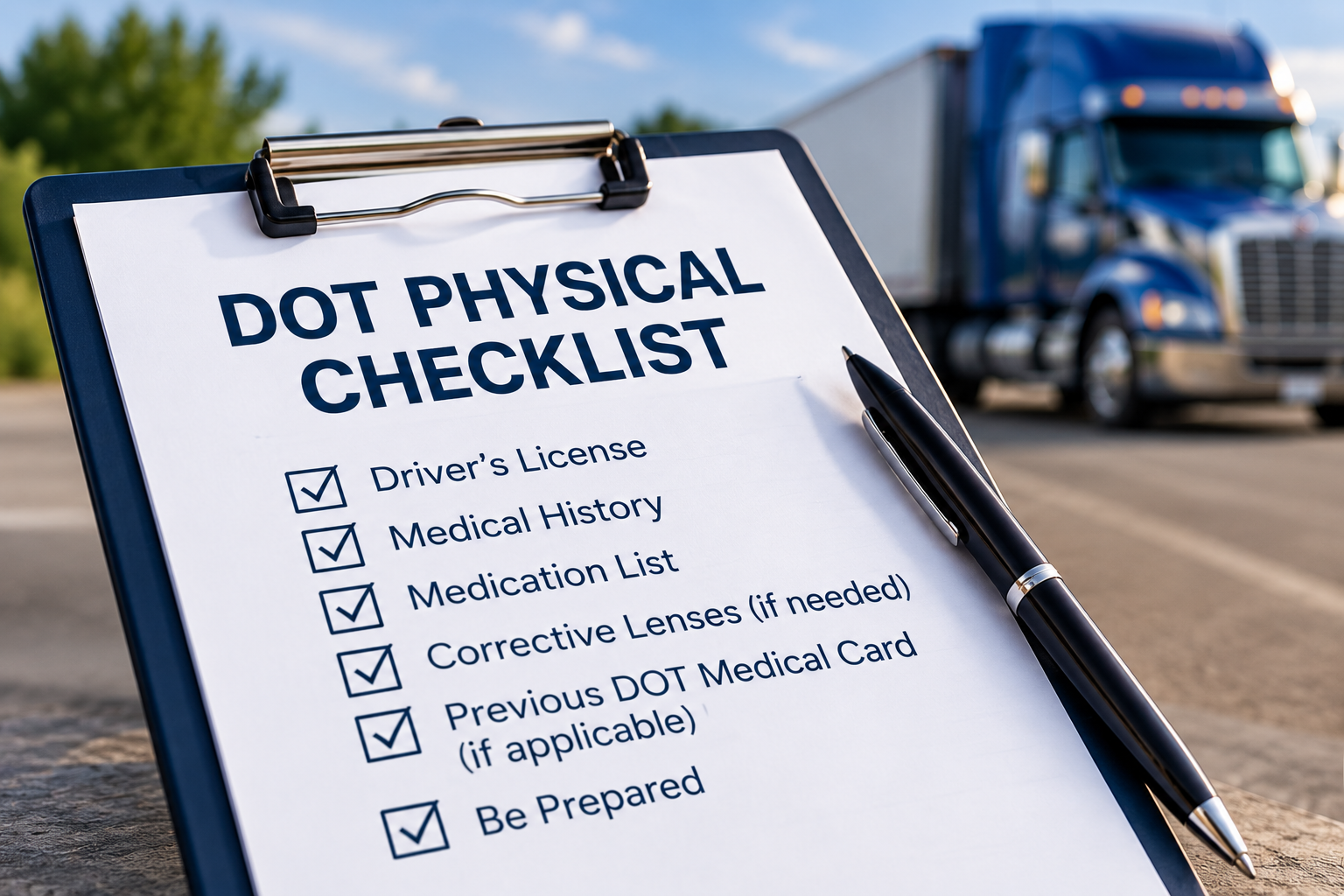
DOT Physical Checklist
What to bring and how to prepare for your exam
DOT Physical Checklist
✓ Valid photo ID
✓ Current medication list
✓ Glasses or contacts, if worn
✓ Hearing aids, if used
✓ Previous DOT medical card, if applicable
✓ Relevant medical records or specialist letters
Being prepared can help prevent unnecessary delays during your DOT physical.
Sleep Apnea & CPAP
What drivers using CPAP should bring to their exam.
Sleep Apnea & CPAP
If you use CPAP, come prepared for your DOT physical.
✓ Bring your CPAP compliance report.
✓ Make sure the report includes recent usage information.
✓ Bring information about your CPAP machine or sleep specialist if available.
✓ Continue using your CPAP as prescribed.
✓ If you've had a recent sleep study or treatment change, bring those records with you.
Helpful Tip: Having your compliance report ready at the time of your exam can help prevent delays in certification.
Certification is based on your individual medical history, treatment, examination, and applicable FMCSA requirements.
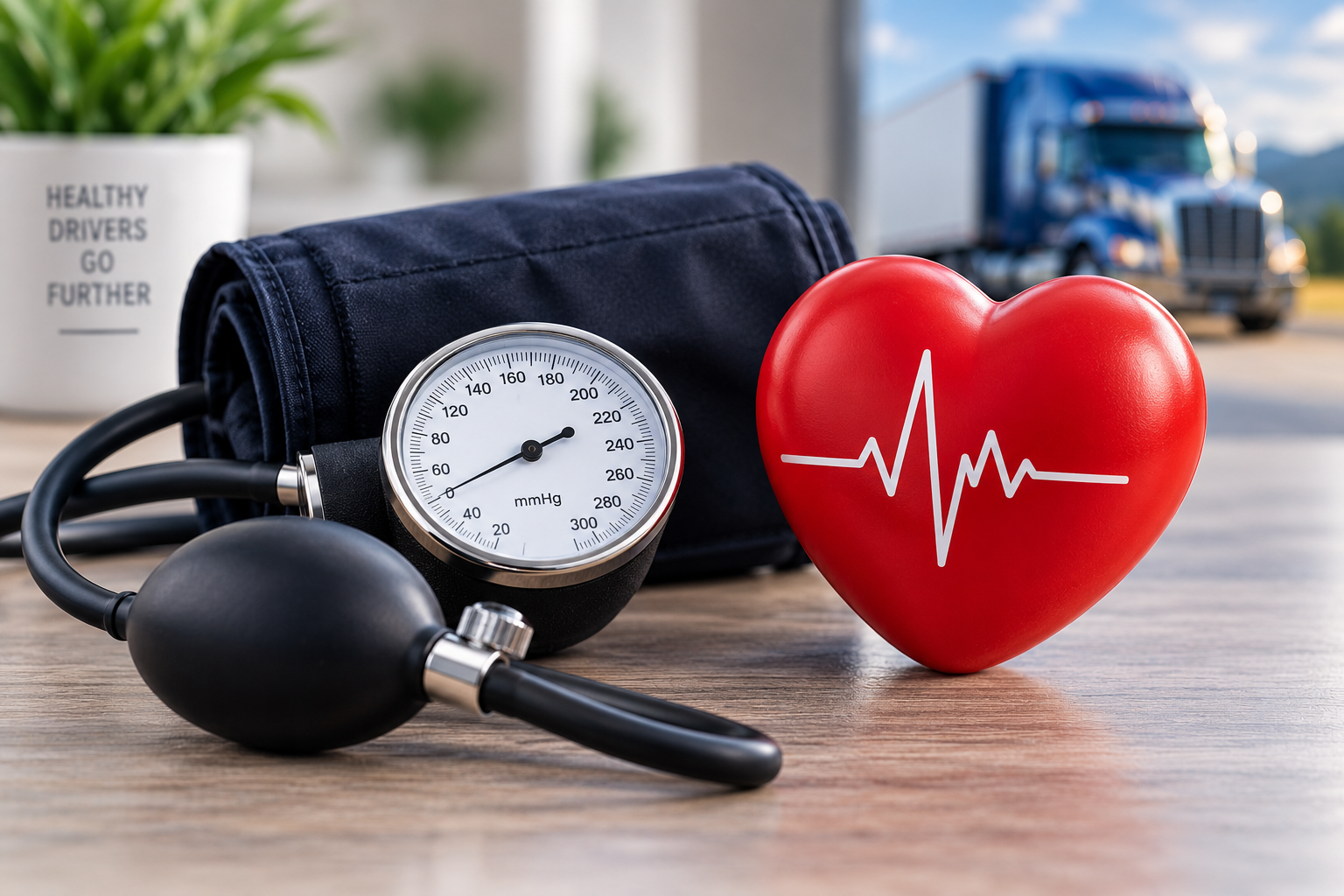
Blood Pressure & Your DOT Exam
Understand how blood pressure can affect certification.
Blood Pressure & Your DOT Exam
Blood pressure can affect how long your DOT medical certificate is issued.
✓ Below 140/90: generally within the acceptable range for certification.
✓ 140–159 / 90–99: may result in a shorter certification period.
✓ 160–179 / 100–109: may require treatment and follow-up before longer certification is possible.
✓ 180/110 or higher: generally requires treatment before certification.
Before your exam:
• Take your blood pressure medication as prescribed.
• Avoid excessive caffeine, nicotine, and energy drinks right before your visit.
• Sit quietly for a few minutes before your blood pressure is checked.
• Bring your current medication list.
Certification decisions are based on the complete DOT exam and current FMCSA requirements.
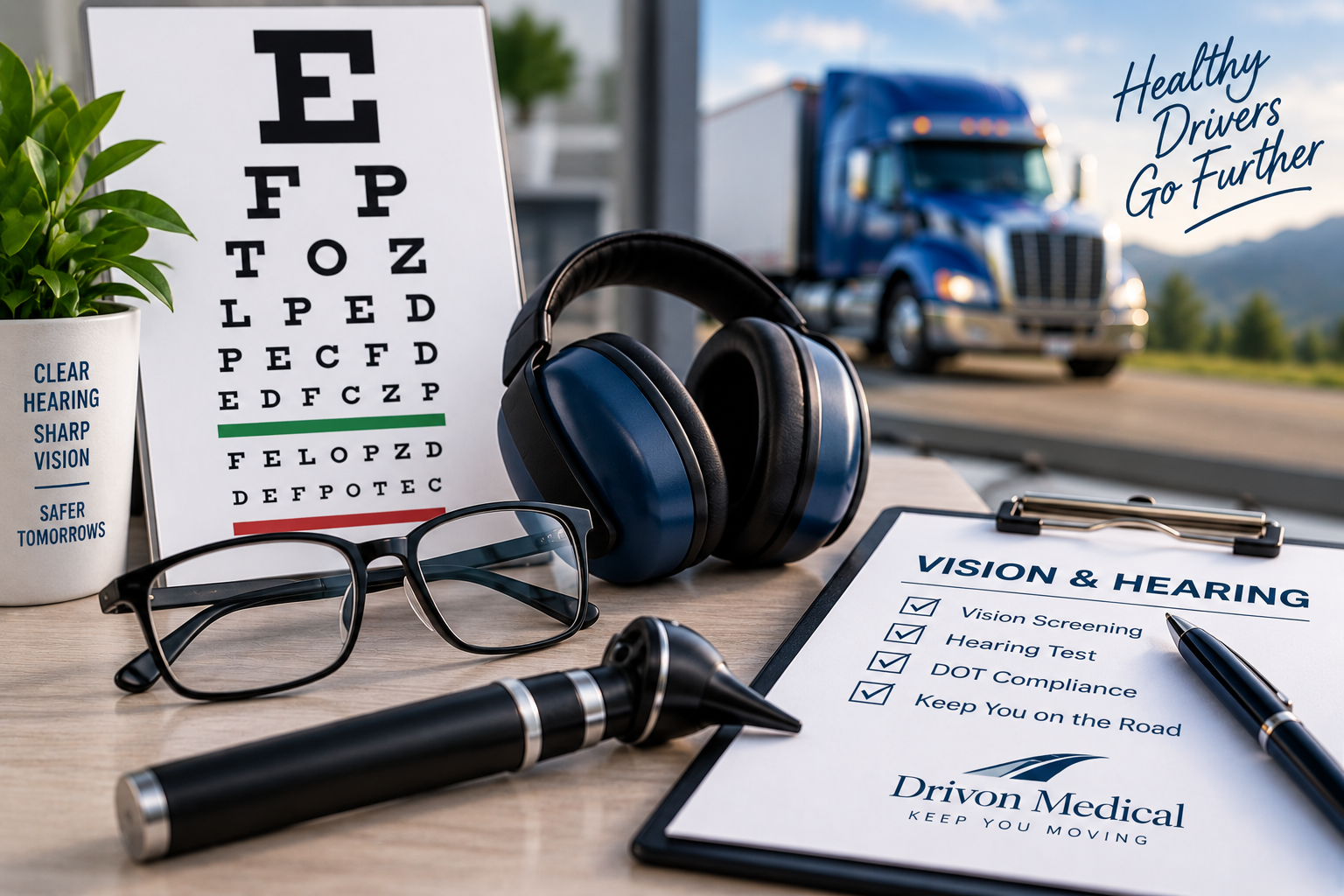
Vision & Hearing Requirements
An overview of DOT vision & hearing standards.
Vision & Hearing Requirements
Your DOT physical includes both vision and hearing testing.
✓ Bring your glasses or contact lenses if you use them for driving.
✓ Bring hearing aids if you use them.
✓ Vision is tested in each eye separately and both eyes together.
✓ Drivers generally must have at least 20/40 vision in each eye, with or without corrective lenses.
✓ Drivers must also meet FMCSA peripheral vision and color-recognition requirements.
✓ Hearing is checked using a forced-whisper test or audiometric testing.
Helpful Tip: If you wear corrective lenses or hearing aids, bring them to your appointment even if you don't use them all the time.
Some drivers who do not meet the standard requirements may qualify under applicable FMCSA alternative vision or hearing provisions.
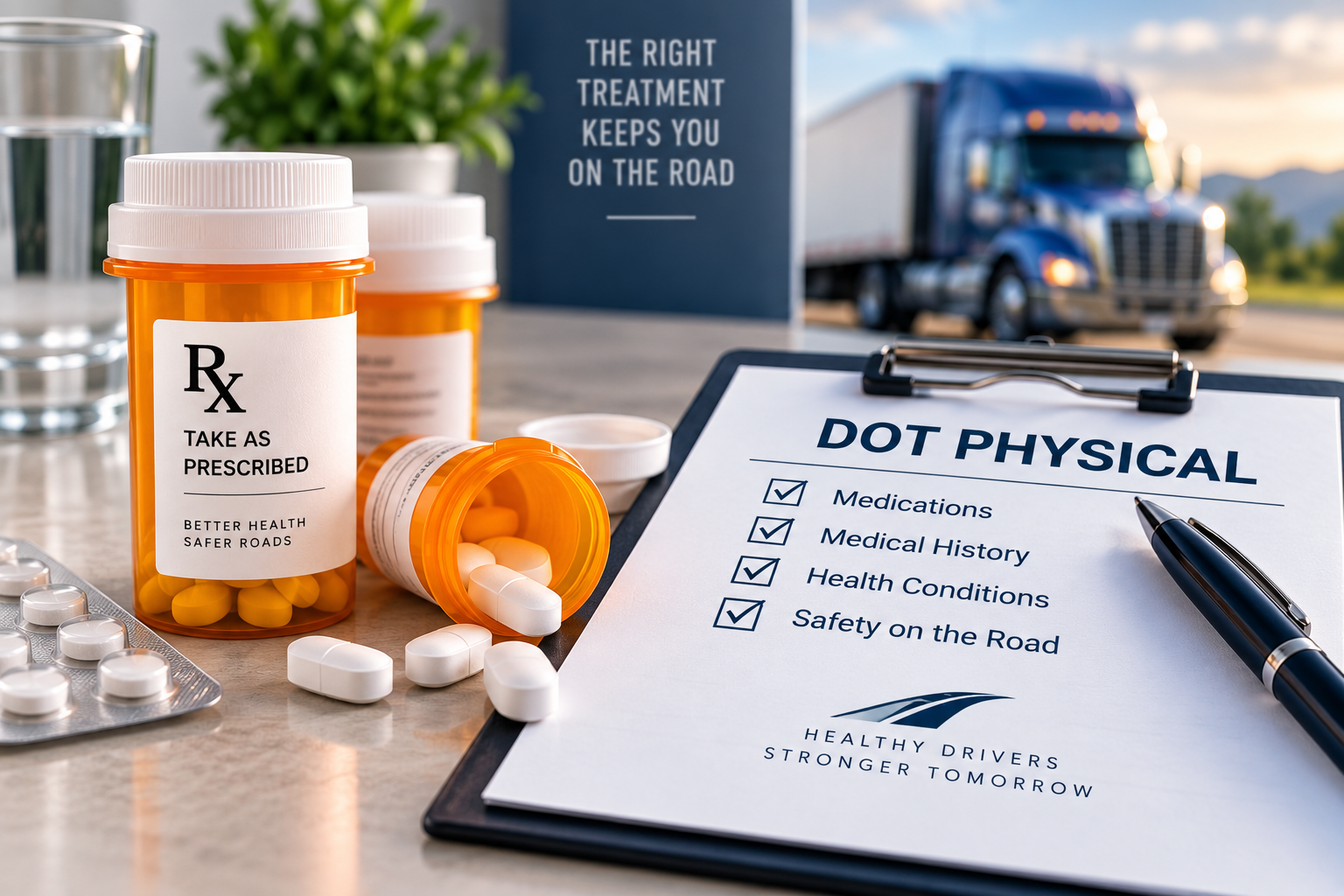
Medication & DOT Physicals
Learn what mediation information your examiner may need.
Medications & DOT Physicals
Taking medication does not automatically disqualify you from DOT certification.
✓ Bring a complete list of all prescription and over-the-counter medications.
✓ Include the medication name, dose, and prescribing provider when possible.
✓ Some medications may require additional information from your treating provider.
✓ Take your medications as prescribed unless your healthcare provider has instructed you otherwise.
Helpful Tip: Bringing an accurate medication list and current medical information can help prevent unnecessary delays.
Certification decisions are based on your medical history, examination, medication effects, and current FMCSA requirements.
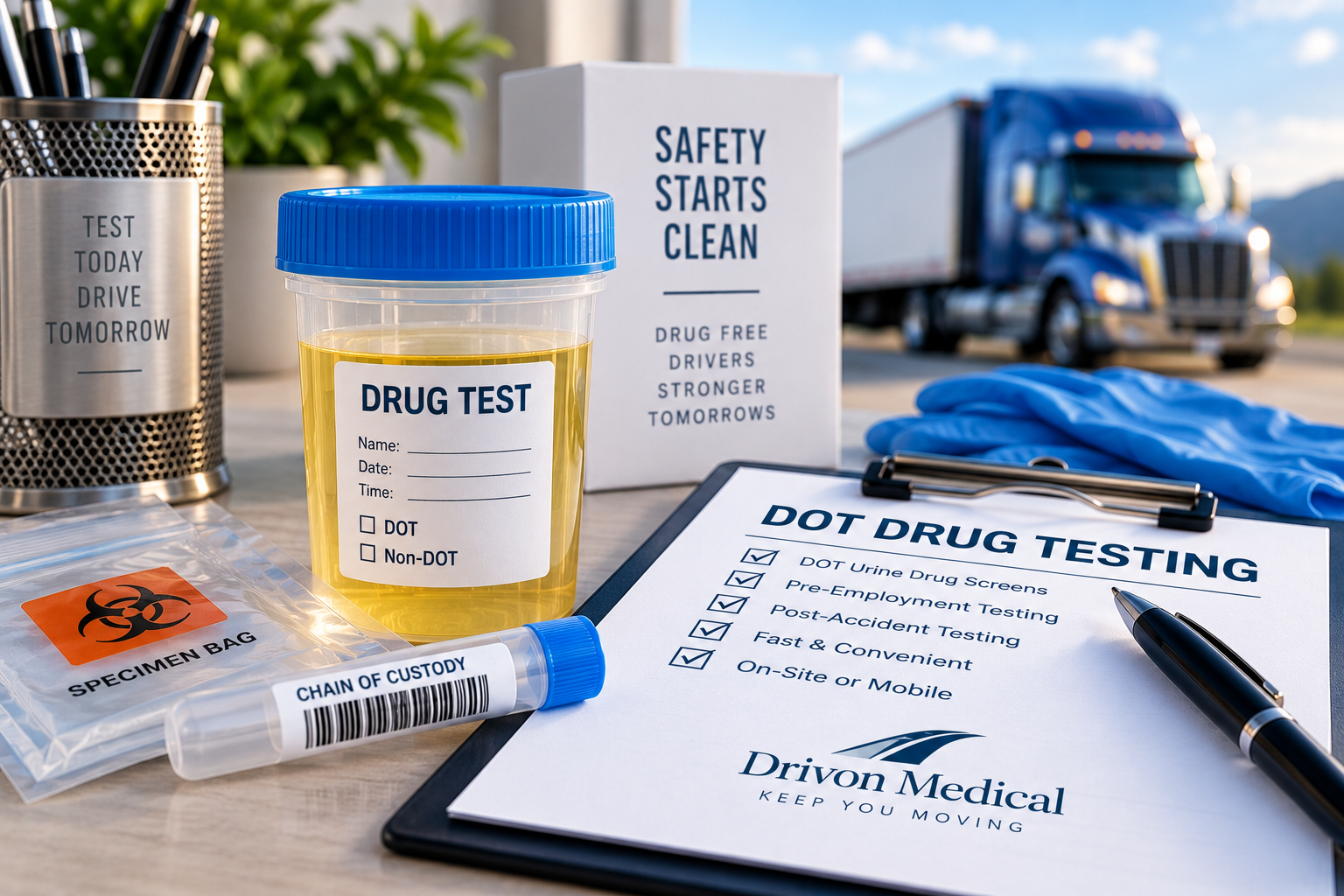
DOT Drug Testing
What to expect during a DOT urine drug screen.
DOT Drug Testing
Here's what to expect during a DOT urine drug test.
✓ Bring a valid photo ID.
✓ You'll be asked to provide a urine specimen following DOT collection procedures.
✓ The specimen is collected using a controlled chain-of-custody process.
✓ DOT testing uses a federally regulated drug testing panel.
✓ If there is a laboratory-confirmed non-negative result, a Medical Review Officer (MRO) may contact you to discuss the result and any legitimate medical explanation.
✓ Follow the collector's instructions carefully throughout the collection.
Helpful Tip: Bring information about any prescription medications you take in case the MRO needs to verify a legitimate prescription.
Important: The urine specimen collected as part of a DOT physical is not automatically a DOT drug test. A DOT drug test is a separate regulated collection.